
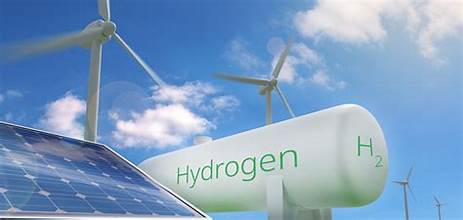
Nigeria plans to become a global hub for green hydrogen, targeting $50 billion in export earnings and aiming to produce four million tonnes of green ammonia annually by 2060.
Officials reiterated this goal during the Nigeria4H2 Project Results Workshop held in Abuja. The workshop brought together key stakeholders to evaluate the country’s preparedness to transition from fossil fuels to cleaner energy solutions.
The Energy Commission of Nigeria (ECN) is spearheading the Nigeria4H2 initiative, working alongside WASCAL and the German government. The project has emerged as a key component of President Bola Tinubu’s Renewed Hope Agenda, placing hydrogen at the center of Nigeria’s clean energy drive.
Representing Vice President Kashim Shettima at the event, Dr. Tope Fasua described green hydrogen as vital to the country’s economic transformation. He stressed that renewable hydrogen—derived from solar and wind—offers Nigeria an opportunity to diversify its economy, meet climate targets, and create jobs.
Fasua pointed out that Nigeria’s natural assets—such as strong solar radiation, favorable wind conditions, and a youthful population—make the country well-positioned to build a thriving hydrogen economy.
Beyond powering industry, Nigeria’s hydrogen strategy places a strong emphasis on green ammonia production, a crucial component in fertiliser manufacturing. The country currently faces a fertiliser shortage that affects farming and threatens food security.
By developing green ammonia locally, Nigeria hopes to strengthen its agricultural sector while also opening up export opportunities. Findings from the Nigeria4H2 study estimate that the country could produce over four million tonnes of green ammonia each year by 2060, reducing dependence on imports and supporting national food systems.
Dr. Emmanuel Ramde, Executive Director of WASCAL, called for a supportive regulatory framework, investment in skill development, and clear national coordination to fully unlock green hydrogen’s potential. He explained that the Nigeria4H2 programme draws on local research expertise—including contributions from key universities—and builds on earlier work such as the H2Atlas project.
Ramde also urged the government to quickly finalize and implement a national hydrogen policy and regulatory framework to attract investment. He added that Nigeria has the potential to lead the region, as ECOWAS countries increasingly view green hydrogen as a central element of their energy transitions.
The ECN confirmed that it has already drafted a National Hydrogen Policy and Strategy. The document outlines key objectives such as energy security, industrial decarbonization, export diversification, and the creation of a research-driven innovation ecosystem.
Seven pillars underpin the strategy, covering industrial uses, power generation, transportation, export markets, and the development of both green and blue hydrogen technologies. A proposed National Hydrogen Council—chaired by the Vice President—will guide implementation, supported by a secretariat and subcommittees focused on domestic adoption and international trade.
Mustapha Abdullahi, ECN’s Director-General, represented by Director of Renewable Energy Ibrahim Sulu, revealed several pilot projects in progress. These include a 50MW solar-hydrogen demonstration plant in Kano and hybrid solar-hydrogen mini-grids for off-grid communities. Deployment is expected to begin between 2026 and 2028.
According to Sulu, Nigeria could generate $10 billion annually in hydrogen exports by 2035, create up to 500,000 jobs, and achieve a 20% cut in industrial emissions. The strategy also includes plans to introduce hydrogen-powered buses to Lagos’s BRT system and integrate green hydrogen into industrial operations at major facilities like the Dangote Refinery and Indorama Petrochemicals.
However, participants acknowledged the serious challenges ahead. An unreliable power supply could hinder hydrogen production via electrolysis, which requires consistent electricity. Limited water infrastructure also poses a problem, as electrolysis depends on purified water. High upfront costs for renewables, electrolysers, and ammonia plants further slow progress. A lack of clear regulations continues to deter investors.
Experts at the event urged the government to fast-track licensing, offer tax incentives to hydrogen developers, and support local manufacturing of vital components such as electrolysers and fuel cells. They also called for public-private partnerships to access global funding and technology, alongside targeted investments in training and workforce development.
The ECN is also exploring a green ammonia pilot project linked to an existing fertiliser plant. With strong backing from both local authorities and international partners, such a facility could become a hub for knowledge-sharing and broader adoption of green hydrogen across Nigeria and West Africa.
Despite structural and financial obstacles, experts remain optimistic. They believe green hydrogen offers Nigeria a path to industrial growth, climate action, energy security, and greater food resilience. According to Ibrahim Sulu, Nigeria’s success will depend on swift action, strong coordination, and a clear long-term vision. With the right approach, he said, Nigeria could lead Africa in hydrogen innovation and become a global example of what is possible.
source:https://guardian.ng/

 African Energy Council