
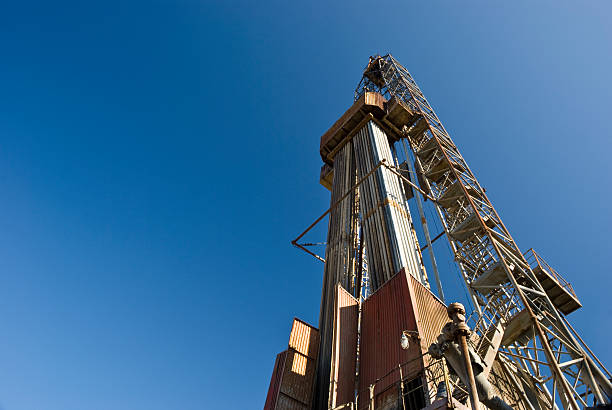
President John Dramani Mahama announced that the Ghana National Petroleum Corporation (GNPC) and its exploration arm, Explorco, are preparing to drill two new exploration wells before the third quarter of 2026 ends.
He emphasized his government’s commitment to work with both current and potential investors to expand oil and gas exploration onshore and offshore.
Mahama highlighted that Ghana holds vast licensed acreages in both offshore and onshore basins, with the Voltaian Basin standing out as one of Africa’s most promising frontiers. He confirmed that GNPC and Explorco are moving forward with plans to drill two new wells by Q3 2026.
He noted that the upcoming wells create a “unique farming opportunity” for partners interested in developing Ghana’s onshore potential.
Mahama affirmed his administration’s dedication to creating a business-friendly environment that attracts investors while protecting national interests. He explained that since taking office in January, his government has reopened Ghana’s upstream sector to investment and is working with new and existing partners to boost offshore and onshore exploration.
He pointed out that reforms introduced under his leadership are already delivering results.
Mahama said recent policy initiatives have sparked renewed interest in Ghana’s offshore basins, leading to increased gas production from the Jubilee and OCTP fields. He added that three supermajors are currently negotiating with GNPC and the Ghana Negotiations Team, demonstrating investor confidence in Ghana’s petroleum basins and governance.
He revealed that his government is reviewing the Petroleum Exploration and Production Act, 2016 (Act 919), to align it with global industry trends.
Mahama explained that GNPC, Shell, and other partners are renegotiating the liquefied natural gas sale and purchase agreement to ensure Ghana receives imported LNG within 18 months. He stressed that this move will cut reliance on costly liquid fuels, strengthen energy security, and reduce overall energy costs.
He outlined an accelerated plan to expand gas infrastructure with new pipelines, processing plants, and storage facilities to efficiently transport gas from production fields to markets while attracting private investment and strategic partnerships.
Looking ahead, Mahama reaffirmed his vision of transforming Ghana into a regional petroleum hub.
He stressed that the downstream strategy focuses on a gas-to-power policy, which aims to make natural gas the primary fuel source for Ghana’s thermal plants, thereby ensuring a reliable and secure energy supply.
source:www.myjoyonline.com

 African Energy Council