
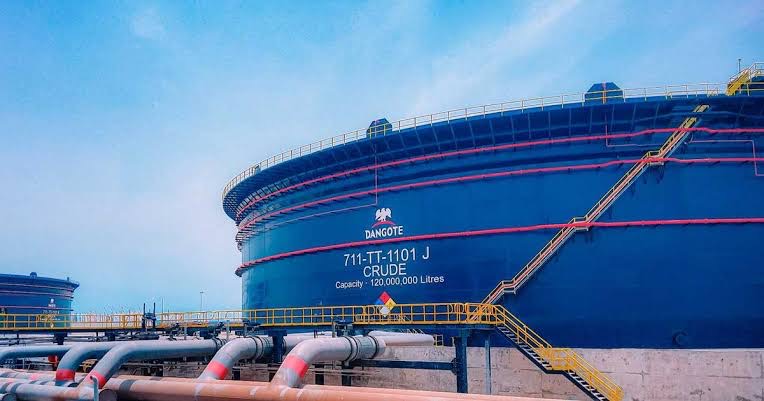
In a bid to strengthen its lead in Nigeria’s downstream oil sector, Dangote Petroleum Refinery has reduced the depot price of petrol to ₦825 per litre, cutting it further from the previous ₦835.
This is the second downward revision in just over a month, following an earlier cut from ₦865. As Africa’s largest privately owned refinery with a daily capacity of 650,000 barrels, the facility is intensifying competition and reshaping local fuel pricing.
Dangote aims to attract more customers and expand market control through this pricing strategy.
An energy expert based in Lagos commented that Dangote isn’t just responding to competitors — it’s setting the pace in the market. The expert noted that depot owners and independent marketers may need to reduce their prices to stay competitive.
This price shift is likely to prompt more downward revisions at petrol stations nationwide, potentially bringing some relief to Nigerians facing steep fuel costs.
Since the federal government ended fuel subsidies in mid-2023, the downstream sector has operated on deregulated pricing, giving room for market competition. Dangote’s local production has since increased competitive pressure on importers and government-linked entities like NNPC Limited.
By refining fuel within the country, Dangote avoids import-related expenses such as foreign exchange challenges, port fees, and shipping costs — enabling it to sell at lower prices.
Fuel sellers across Nigeria’s regions are already adjusting pump prices in response, especially in states like Lagos, Oyo, and Ogun, where fuel had recently sold for over ₦850 per litre.
Transport unions and logistics companies have welcomed the price drop, pointing out that consistent reductions could ease inflation and lower household expenses.
As local refining accelerates and Dangote expands distribution, analysts predict increased pricing competition — particularly with plans to begin producing diesel, aviation fuel, and other refined products at full scale.
The Dangote Group has affirmed its goal to satisfy Nigeria’s fuel demand and position the nation as a key exporter of refined petroleum across West Africa.
source: naija247news.com

 African Energy Council