
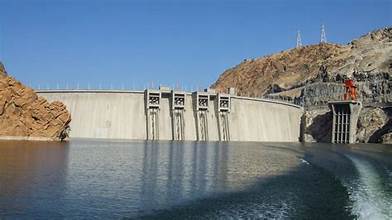
Ethiopia has officially inaugurated Africa’s largest hydroelectric dam, a project set to power millions of homes while also intensifying tensions with Egypt downstream.
With a population exceeding 120 million, Ethiopia views the $5 billion Grand Ethiopian Renaissance Dam (GERD), built on a Nile tributary, as central to its economic growth.
Since the first turbine began operating in 2022, the dam has steadily increased its output, reaching a peak of 5,150 MW, placing it among the world’s 20 largest hydropower plants, though still only a quarter the size of China’s Three Gorges Dam.
During Tuesday’s ceremony in Guba, an Ethiopian fighter jet roared low over the dam’s cascading waters, which drop 170 metres (558 feet).
Prime Minister Abiy Ahmed addressed dignitaries, including the presidents of Somalia, Djibouti, and Kenya, beneath a massive Ethiopian flag.
Speaking to the region, Abiy declared, “Ethiopia built the dam to prosper, to electrify our region, and to change history—not to harm our brothers in Sudan and Egypt.”
He emphasized that the project will bring electricity to nearly half of Ethiopia’s citizens who lacked it as recently as 2022, while also allowing the country to export surplus power to neighbors.
The vast reservoir, now covering an area larger than Greater London, will ensure steady irrigation water and help reduce flooding and drought, according to the government.
Still, Egypt and Sudan have long viewed the dam with concern. Since construction began in 2011, they have warned that it threatens their water security.
Egypt, recalling its own Aswan High Dam on the Nile, fears the GERD could cut its supply during droughts and set a precedent for more upstream dams.
Cairo’s Foreign Ministry told the U.N. Security Council that Ethiopia’s inauguration of the project violated international law.
source: www.reuters.com

 African Energy Council