
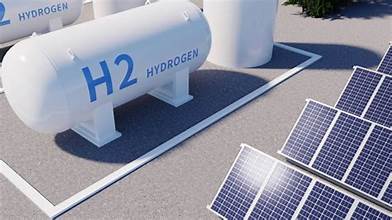
Namibia has approved a 3 GW solar-to-hydrogen and ammonia project in the Erongo region, northwest of the country. Across Africa, more nations are diversifying their energy sources by investing in large-scale renewable projects that could reshape the continent’s power landscape. As traditional energy sources are phased out, renewables like solar and hydrogen are becoming key to filling the gap.
Namibia, one of Africa’s largest countries by land area but sparsely populated, has vast stretches of desert land with limited development. These open spaces provide ideal conditions for solar energy generation.
Because Namibia’s energy infrastructure remains underdeveloped, local operators have been exploring practical ways to expand capacity. The idea of using the country’s abundant sunlight for hydrogen and ammonia production has emerged as a fitting solution for its energy market.
Italian energy company Zhero Molecules Walvis Bay (Pty) Ltd has received environmental approval from Namibia’s Ministry of Environment, Forestry and Tourism, securing an Environmental Clearance Certificate (ECC) for the project. The next step is to obtain a generation license from the Electricity Control Board. The project, part of the Zhero Molecules Walvis Bay initiative, will cover about 5,300 hectares across three areas near Walvis Bay, Namibia’s second-largest city and main port.
The site will feature a 3 GW solar farm paired with a 3,500 MWh battery storage system. It will also host facilities for electrolysis, hydrogen production, and ammonia export. The hydrogen plant aims to produce around 98,000 tonnes of green hydrogen each year, which will be converted into 550,000 tonnes of green ammonia for export to Europe and other international markets.
This development adds to the growing momentum in the global hydrogen sector. Countries like Norway are already adapting ships to run on ammonia, while policymakers worldwide are recognizing hydrogen’s clean potential. As former U.S. Representative Dan Lipinski noted, hydrogen energy produces no emissions other than water—a major step toward a cleaner future.
source: energiesmedia.com

 African Energy Council