
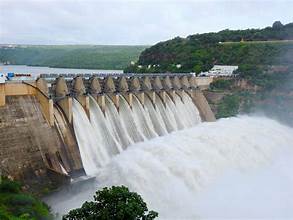
Mozambique has secured support from the World Bank for its plan to build Southern Africa’s largest hydropower plant in over 50 years.
The World Bank intends to contribute debt and equity financing, risk guarantees, and insurance for the $5 billion Mphanda Nkuwa project on the Zambezi River, along with a $1.4 billion power transmission network.
Mozambique’s President, Daniel Chapo, stated that the country aims to become the main energy provider for the Southern African Development Community, a 16-nation bloc that already imports power from Mozambique.
The planned 1,500-megawatt dam is a key element of Mission 300, a World Bank-led initiative to connect 300 million people in sub-Saharan Africa to electricity by 2030. The region currently holds more than 80% of the world’s 680 million people without access to power.
World Bank President Ajay Banga estimated that the Mission 300 program, supported by the African Development Bank, the International Monetary Fund, and private investors, could attract over $100 billion in funding.
A consortium including Electricité de France, TotalEnergies, and Sumitomo Corporation is responsible for constructing the Mphanda Nkuwa plant. Mozambique’s government and Hidroeléctrica de Cahora Bassa will also hold shares in the project.
The World Bank, through its International Finance Corporation, will provide debt and take equity in the dam. Its International Bank for Reconstruction and Development will likely issue risk guarantees, while the International Development Association will supply concessional funding for the 1,300 kilometers of transmission infrastructure. The Multilateral Investment Guarantee Agency will offer political risk insurance.
The government will receive credit to finance the construction of the transmission lines.
Mphanda Nkuwa will sit downstream of Cahora Bassa, which has a capacity of 2,075 megawatts and was the last major hydropower project built in the region, completed in 1974.
Currently, about 60% of Cahora Bassa’s power is sent directly to South Africa via dedicated transmission lines, a legacy of colonial-era energy arrangements.
The new plant will link to Mozambique’s southern power grid—one of three separate networks in the country—allowing it to serve the capital, Maputo, and export excess power to neighboring countries such as Zambia, Malawi, and Zimbabwe.
The updated design for Mphanda Nkuwa will drastically reduce the reservoir’s size compared to Cahora Bassa and Kariba. Cahora Bassa spans nearly 3,000 square kilometers, while Kariba exceeds 5,000 square kilometers and holds the world’s largest man-made water volume. The smaller reservoir aims to lessen the dam’s social and environmental impact.
This project marks the beginning of a broader five- to ten-year plan to expand Mozambique’s energy generation. The plan includes building smaller upstream plants of 400 MW and 200 MW, expanding Cahora Bassa’s capacity by more than 50%, and developing a 400 MW solar facility nearby.
The World Bank may incorporate support for these future initiatives into a new five-year country partnership framework with Mozambique.
Mozambique also hopes to increase its power export earnings—currently at $240 million annually—and use new energy supplies to support local processing of resources like graphite and beryllium, as well as expand electricity access to its citizens. Currently, 64% of the population has access to electricity, doubling the rate from 2018.
The World Bank’s involvement comes as Mozambique works to rebuild investor confidence after political violence last year that claimed many lives.
The country, with a median age of 18 and long governed by the Frelimo party, also faces high youth unemployment and a jihadist insurgency in the north that has delayed $57 billion in liquefied natural gas projects—developments that could significantly transform its economy.
Ajay Banga emphasized the World Bank’s role in helping unstable countries like Mozambique find a path toward stability and development. He noted that stable countries would likely not require such external assistance.
source:www.energyconnects.com

 African Energy Council