
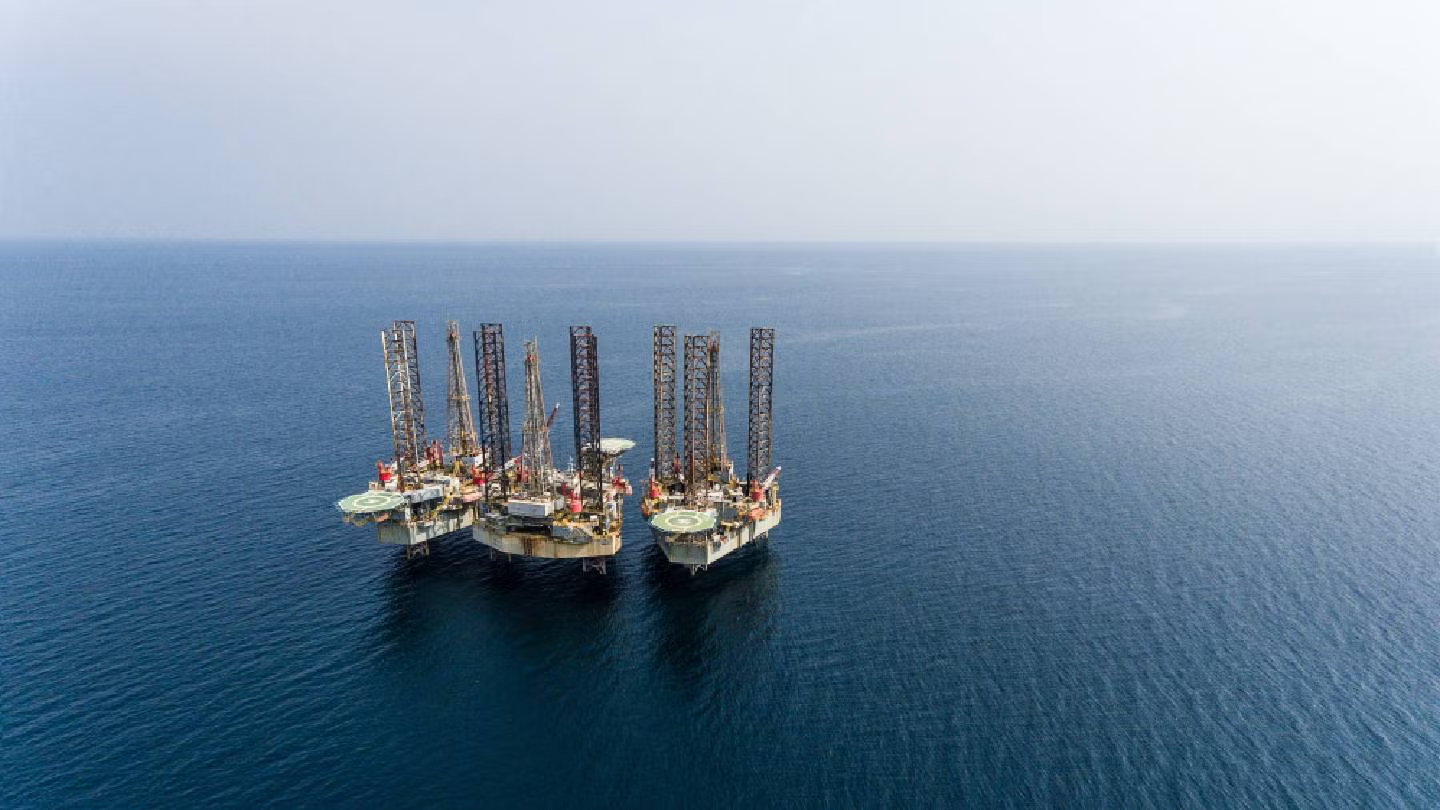
Ghana’s flagship Jubilee offshore oil field is delivering its strongest production recovery in years as new drilling activity reverses a prolonged decline and restores confidence in the country’s petroleum sector. Operator Kosmos Energy reported average production of 72,000 barrels of oil per day (bpd) during the second quarter of 2026, with output rising above 85,000 bpd by the end of the quarter after newly completed wells came online.
Kosmos Energy said the production increase marks a major turnaround for Ghana’s largest producing oil field after years of declining output that reduced government petroleum revenues and raised concerns about the future performance of the country’s ageing offshore assets. Higher production is expected to strengthen public finances, attract additional investment into the energy sector and support Ghana’s wider economic development agenda.
Jubilee has remained one of Ghana’s most valuable oil assets since commercial production began in 2010. Over time, however, natural reservoir depletion and ageing wells steadily reduced output, which fell to about 59,000 bpd in the final quarter of 2025. Kosmos Energy launched its 2026 drilling programme to raise production capacity and extend the field’s operating life. The J76 production well has become one of the programme’s strongest performers since entering service in mid-June, currently producing around 20,000 bpd. The company has also completed drilling on the J77 well, which is expected to begin production soon. Once operational, Jubilee’s production capacity is expected to reach about 90,000 bpd. Kosmos plans to begin drilling a fifth development well, J50, before the end of July to sustain production growth in the years ahead.
Kosmos Energy President and Chief Executive Officer Andrew Inglis said the early success of the drilling campaign highlights the long-term potential of the company’s offshore assets in Ghana. Beyond the company’s operations, the recovery is important for Ghana because the petroleum sector remains a key source of government revenue, foreign exchange earnings and national development.
The production rebound follows a challenging period for Ghana’s oil industry. The Public Interest and Accountability Committee (PIAC) reported that Jubilee’s output fell by 32.8% during the first half of 2025 compared with the same period in the previous year, reducing petroleum revenues at a time of increasing fiscal pressure. Data from the Bank of Ghana and the Ministry of Finance showed petroleum revenue dropped by about 43% in 2025, falling from approximately US$1.35 billion in 2024 to around US$769 million. The decline highlighted Ghana’s vulnerability to changes in oil production and global crude prices.
The renewed investment in Jubilee comes after Ghana extended the operating licences for the Jubilee and TEN offshore fields until 2040. Parliament approved the extension earlier this year, giving operators greater certainty to pursue long-term investments while supporting continued development of existing reserves. Under the revised agreement, the Ghana National Petroleum Corporation’s (GNPC) participating interest will increase from 19.69% to 29.69% from 2036, giving the state a larger share of future petroleum revenues. Operators have also received approval to drill up to 20 new wells under the extended licences, creating opportunities to sustain production beyond the current development programme.
By extending the lifespan of its mature offshore fields, Ghana can maximise returns from existing resources while continuing efforts to diversify its economy and expand investment in renewable energy. The recovery also reflects a broader trend across many African oil-producing countries. Although governments are advancing energy transition strategies, oil and gas revenues continue to finance public services, infrastructure and economic development.
Industry analysts believe higher production alone will not guarantee lasting economic benefits. Ghana’s ability to generate long-term value from the recovery will depend on effective revenue management, transparent governance and sustained investment in sectors that reduce the country’s reliance on petroleum income.
As production continues to rise at Jubilee, attention is shifting from operational performance to how the additional oil revenues will be managed. The strength of Ghana’s fiscal policies and governance systems will ultimately determine whether the latest production gains translate into sustainable economic growth and broader national development.
source: pumpsafrica

 African Energy Council