
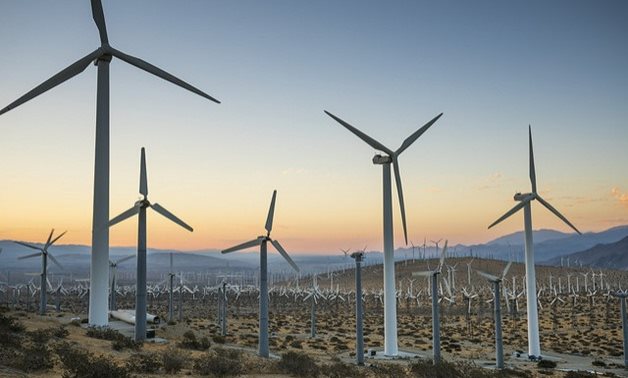
Namibia has signed a clean energy partnership with China’s Sany Energy Equipment as it works to expand domestic power generation and reduce its dependence on imported electricity.
The agreement was signed during President Netumbo Nandi-Ndaitwah’s state visit to China. Namibian company Okaparwa Investment CC signed the deal with Sany Energy Equipment Co. Ltd.
The agreement establishes a joint venture that will focus on clean energy and the oil and gas sector. It also commits both parties to developing Namibia’s natural resources, transferring technology, training local workers, and building local manufacturing capacity.
Sany Energy Equipment, the renewable energy subsidiary of China’s Sany Group, operates in wind power, solar energy, and battery storage. Sany Group is one of China’s largest industrial equipment manufacturers.
The Namibian presidency, quoted by The Namibian, said the partnership represents an important step toward the country’s industrialization and economic transformation.
Namibia continues to face major energy access challenges. The country’s National Energy Compact, submitted to the World Bank, shows that 59.5% of the population had access to electricity in 2023, while more than half of households relied on firewood and charcoal for cooking.
The government aims to increase electricity access to 70% and clean cooking access to 61% by 2030. Achieving those targets will require addressing significant structural challenges.
Climate Analytics estimates that Namibia has around 500 MW of installed power generation capacity, which falls well below the projected peak demand of 931 MW in 2025.
According to the International Energy Agency’s 2024 report on renewable energy opportunities in Namibia, the country imports between 60% and 70% of its electricity from neighboring countries, mainly South Africa. That reliance has contributed to the highest electricity prices in Southern Africa.
As it works to address these challenges, the government has pushed its universal electrification target from 2030 to 2040, according to TheBrief24. Bloomberg estimates that clean energy investment in Namibia reached $125.59 million in 2024, but that amount remains below what is needed to close the country’s infrastructure gap.
To help close that gap, the government is preparing tenders for 300 MW of solar projects and up to 500 MW of wind capacity, according to the International Renewable Energy Agency’s (IRENA) 2025 report on renewable energy investment in Namibia.
source: www.ecofinagency.com

 African Energy Council